
Second-generation anticoagulant rodenticides, or SGARs, are a group of rodent poisons that work by stopping blood clotting or coagulating, causing rodents to bleed to death. SGARs are significantly more potent and much longer lasting than other rodent poisons, often killing in a single dose.
However, when rodents consume bait containing an active ingredient like brodifacoum, the poison can remain active in their bodies long after they have died, sometimes even for months. Also poisoned rodents can take days to die, they are often consumed by owls, raptors, snakes and small mammals as easy prey.
These poisons then accumulate in the body of the predator, leading to a slow and painful death from secondary poisoning. Large numbers of predators such as Powerful Owls have been found with high quantities of these poisons in their liver. New research from Edith Cowan University scientists in Western Australia has found toxic or lethal levels of second-generation rat poisons in EVERY owl tested from the south-west and Perth.
BirdLife Australia and many other conservation groups have been calling for Australian Pesticides and Veterinary Medicines Authority to end the public sale of dangerous second-generation rat poisons. After more than two years they produced weak recommendations for a risk mitigation approach with the onus on consumers despite accepting that SGARS posed an unacceptable risk to non-target animals. Its recommendations included using tamper-proof bait boxes and labels urging users to dispose of dead rodents themselves. Birdlife Australia said this was unrealistic given that the rodents could wander anywhere after being affected by the poison.
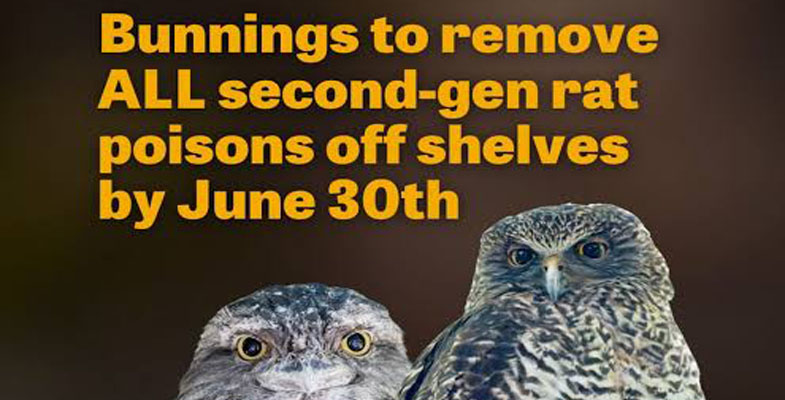
After a strongly supported submission and petition campaign the Australian Pesticides and Veterinary Medicines Authority finally agreed in March 2026 to suspend these chemicals from public sale. Bunnings has committed to taking all SGARs off their shelves by 30 June 2026, 9 months ahead of the APVMA deadline for a recommended full retail ban of the wildlife-killing poisons. Now SGARs can only be sold to people who are trained and competent in their use by making them a restricted chemical product.
This has taken a long time. Second generation anticoagulants have been banned from sale in the US since 2013.